
Warehouse Security in Vaughan & Concord: Guards and Patrols
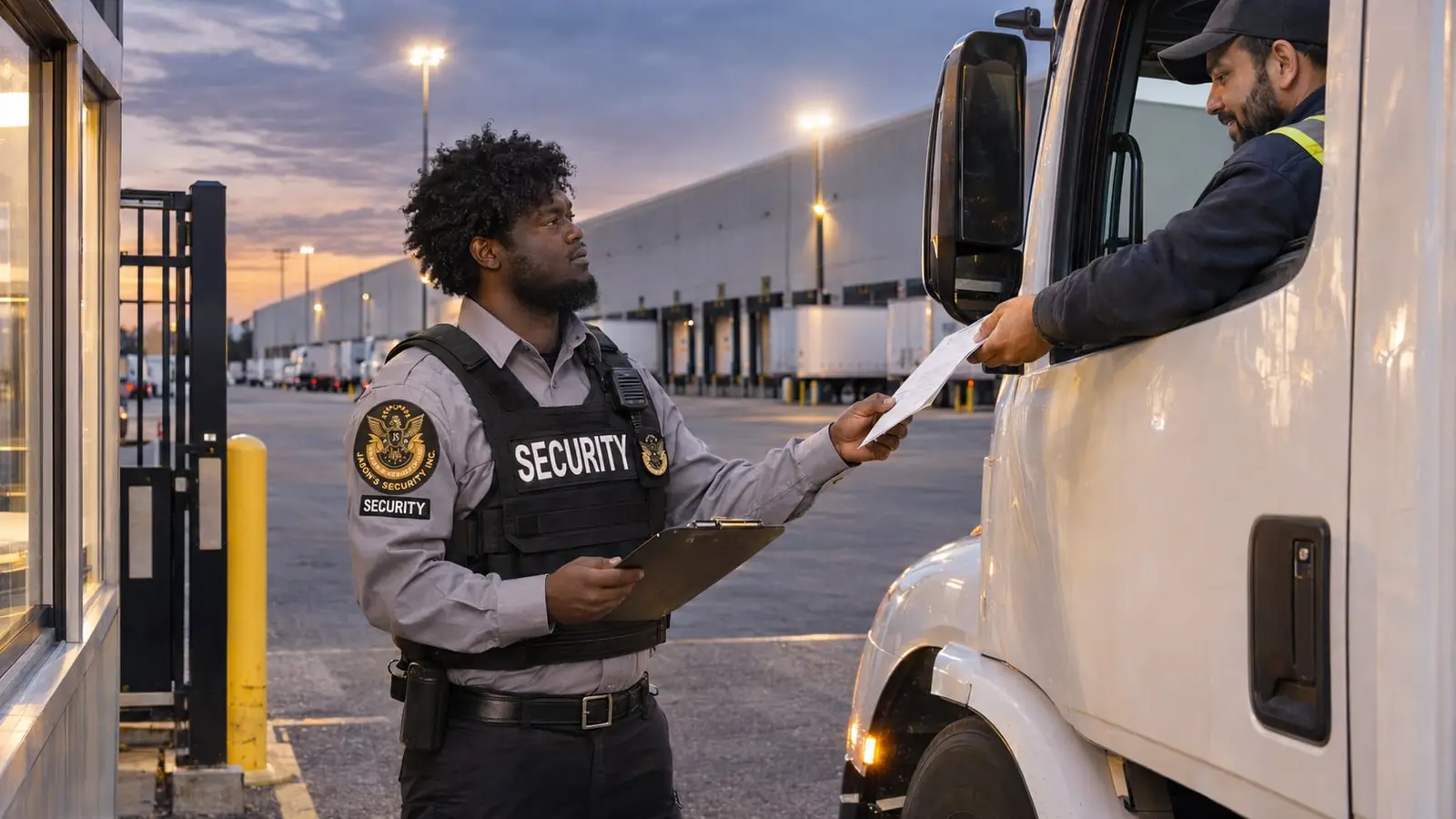
Warehouse security in Vaughan and Concord is the mix of licensed guards, mobile patrols and site checks that protects stock, trailers and yards. It guards against theft, break-ins and trespassing. The right setup depends on when your trucks move and when the site sits empty, and every shift should end with a written report.
Jason’s Security Inc. has its head office at 28 Roytec Rd in Vaughan. Every guard we post is licensed under Ontario’s PSISA. Below, we explain the main risks, what a guard does on each shift, how guards work with gates and locks, and how to choose your coverage.
Key facts
- The top five cargo theft hotspots in Canada are Mississauga, Brampton, Vaughan, Toronto and Montreal.
- The national cargo recovery rate fell from 13% in 2024 to 9% in 2025, and the trailer recovery rate dropped from 64% to 44%.
- Any business that sells the services of security guards or private investigators in Ontario requires an agency licence.
- A gatehouse guard suits warehouses with trucks moving day and night, a mobile patrol suits quieter sites, and many warehouses use both.
- On each shift a warehouse guard checks driver IDs, logs trucks, matches trailer seal numbers to paperwork, patrols the site and writes a shift report.
- Jason’s Security Inc. is based at 28 Roytec Rd in Vaughan, and its dispatch team runs 24/7.
What are the main security risks for warehouses in Vaughan and Concord?
The main risks are cargo and trailer theft, break-ins, internal theft, trespassing and vandalism, and fire safety. Vaughan is one of the GTA’s biggest industrial and logistics hubs, and Concord, Woodbridge and the business parks along Highways 400, 407 and 427 are full of warehouses, distribution centres, trucking yards and manufacturers. These sites hold valuable stock and trailers, run around the clock and often sit empty at night. The Équité Association reports that “The top five cargo theft hotspots are Mississauga, Brampton, Vaughan, Toronto, and Montreal”.
- Cargo and trailer theft: loaded trailers left in a yard overnight or over a long weekend.
- Break-ins: forced doors, cut fences and stolen equipment or stock.
- Internal theft: stock leaving through shipping doors without paperwork.
- Trespassing and vandalism: people entering empty yards, damaging vehicles or dumping waste.
- Fire and safety: forklifts, battery charging and stored goods need regular checks, and a fire watch may be needed when fire systems are offline.
Manufacturing plants in the same business parks face the same core risks, plus unauthorized access to production areas, so their coverage is planned the same way.
What does a warehouse security guard do on each shift?
A warehouse security guard controls who and what enters the site and records every truck and visitor. They also patrol the yard and building, watch alarms and cameras, and write a report at the end of the shift. With on-site guard coverage, a licensed guard is at the gate or in the gatehouse for the hours you book.
The work is routine on purpose. Each task creates a record or a check, and together they show you what happened while you were away.
A night at the gate: one truck, start to finish
Here is an everyday example of how one delivery moves through a guarded gate.
- A truck arrives and the guard checks the driver’s ID, carrier and booking against the day’s schedule.
- The guard logs the driver, carrier, truck and time in.
- For shipment and load verification, the guard checks that the trailer seal is unbroken and that the seal number matches the paperwork.
- The truck is directed to its dock, and the guard notes where the trailer is parked.
- On the way out, the guard logs the time again and checks the seal on any loaded trailer.
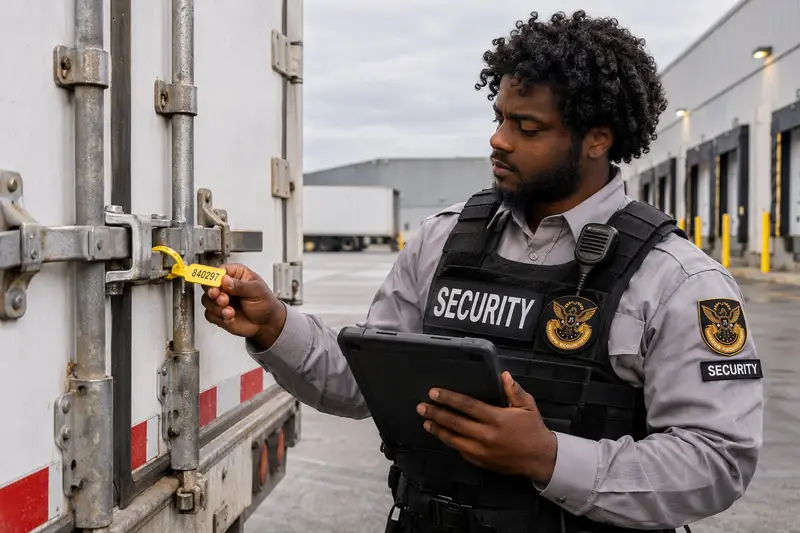
If a seal does not match or a truck was never booked, the guard does not wave it through. They hold the truck and call the contact named in the post orders, the site-specific instructions for that post. Truck, trailer and seal logs also create a record that helps catch theft and settle disputes later.
Warehouse guard shift checklist
Beyond the gate, the shift covers visitor management, patrols and alarm response and the report. Here is what you should see on every shift.
- Check each driver’s ID and booking before the truck enters, and record it in the gate log.
- Log the carrier, truck and times in and out.
- Match trailer seal numbers to the paperwork and confirm seals are unbroken.
- Sign in every visitor and contractor, and sign them out when they leave.
- Patrol doors, fences, lighting and parked trailers at the scheduled times.
- Watch the alarm panel and CCTV screens, and note anything unusual.
- Respond to alarms as set out in your post orders, and escalate to dispatch when needed.
- Write the shift report, covering trucks, visitors, patrols and any incidents.
If you would like these checks at your own gate, talk to us about your shipping hours and how many trailers sit in your yard.
How do guards work with gates, locks and access control hardware?
Guards make gates, padlocks and access control hardware useful. A lock only protects a warehouse when someone checks that it is closed, working and used the right way. The gatehouse guard controls who and what enters and leaves, and that is where hardware and people meet.
Take a simple case. A fence, a heavy-duty padlock and a fob reader do nothing if the gate was left open after the last shipment. On a round, the guard confirms the gate is shut, the padlock is locked and the lighting is on, then records what they found.
Typical hardware checks on a warehouse post include:
- Gates locked and lit outside shipping hours.
- Padlocks, keyed doors and fob or card readers working as intended.
- Key control: who holds keys, and whether anyone has lost or not returned one.
- Broken locks, cut fencing or damaged cameras reported straight away.
When something is wrong, the guard acts and reports it. That means calling 24/7 dispatch and securing the spot where possible. It also goes in the shift report so you can fix it.
Do you need an on-site guard, mobile patrol or both?
An on-site gatehouse guard suits busy warehouses with trucks and stock moving day and night, a mobile patrol suits quieter sites, and many warehouses use both. The table below helps you decide which setup matches how your site actually runs.
| On-site gatehouse guard | Mobile patrol | |
|---|---|---|
| Best for | Distribution centres with trucks moving day and night, high-value stock or a yard full of trailers | Smaller units, quieter sites or several units in the same business park |
| Presence on site | A guard at the gate who controls who and what enters and leaves | An officer who visits at random times |
| Truck and seal checks | Trucks logged at the gate as they come and go | Doors, gates and trailers checked during each visit |
| Response to alarms | Already on site | Responds to alarms, travelling from the previous stop |
| Overnight and weekend fit | Staffed for the hours you choose, such as shipping hours | Suits nights and weekends when the site is empty |
| Reports you receive | A written shift report | A written report of each visit |
Many sites use a gatehouse guard during shipping hours and a mobile patrol overnight and on weekends, backed by 24/7 dispatch and the shift report described above. That way the yard is still checked when nobody is working, and if an alarm sounds at 2 a.m., dispatch can send someone.
Here is how that looks in practice. Say your Concord distribution centre ships on weekdays and closes for a long weekend with loaded trailers in the yard. The gatehouse guard logs the last truck out, checks the seals on the parked trailers and locks the gate. Over the weekend, a mobile patrol officer visits at random times to check doors, gates and trailers. When you reopen, the reports show the yard was checked while you were away.
In both setups, perimeter patrol is how problems get found early. It means a walk or drive along the fence line, doors, gates and trailers.
The stakes are high for loaded trailers. Insurance Business Canada reports: “The national cargo recovery rate fell from 13% in 2024 to 9% in 2025, while the trailer recovery rate dropped from 64% to 44%, reflecting how quickly stolen goods are redistributed through organized networks once taken.” Stopping a theft at the gate is far better than trying to recover stock afterwards.
Our guide to mobile patrol vs on-site security guards compares the two in more detail.
Is your warehouse secure? A quick checklist
Your warehouse is in good shape if you can answer yes to all six questions below. Each “no” usually points to a common mistake, and the fix is often simple.
- Are gates locked and lit outside shipping hours? The mistake: a gate left open after the last truck leaves, or a dark yard where nobody notices a visitor.
- Is every truck, driver and trailer seal recorded on the way in and out? The mistake: relying on memory or paper slips, so nobody can prove what left the site and when.
- Are loaded trailers parked where a guard or camera can see them? The mistake: leaving them at the back of the yard overnight or over a long weekend. That is when cargo and trailer theft tends to happen.
- Is someone checking the site overnight and on long weekends? The mistake: assuming an alarm alone is enough, when nobody is there to look at doors, gates and trailers.
- Do you know who responds, and how fast, if an alarm goes off at 2 a.m.? The mistake: a call list with no named responder and no agreed time.
- Do you get a shift report? The mistake: verbal updates that leave no record for insurers or for your own follow-up.
Given how rarely stolen cargo comes back (see the recovery figures above), any “no” is where to start. Tell us what you found and we will suggest the first step.
Why use a Vaughan-based warehouse security company?
A Vaughan-based company knows the local industrial parks and can plan coverage quickly. It can also set that coverage around how your yard and docks run. Jason’s Security Inc. is based at 28 Roytec Rd in Vaughan, and our security services include gatehouse guards, truck logs and yard patrols in Concord and Woodbridge.
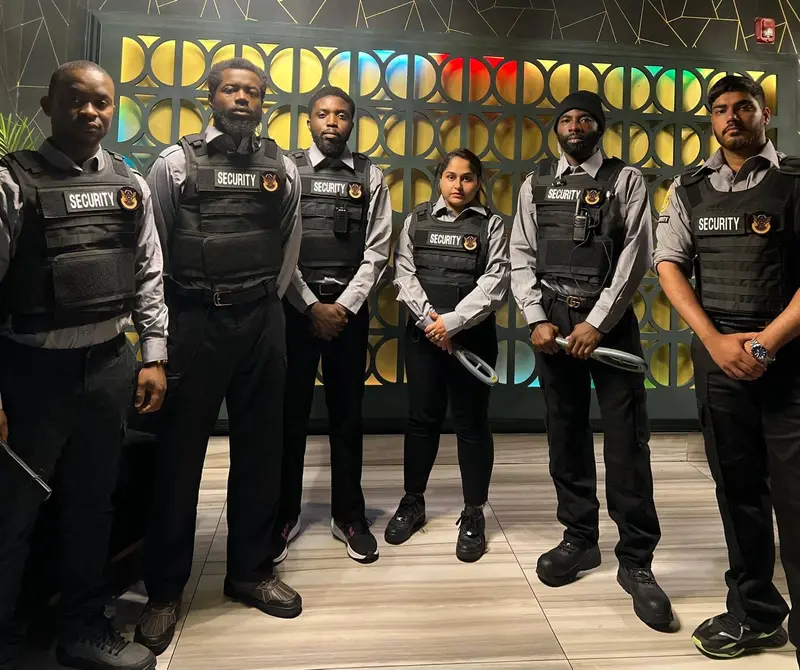
Licensing is the first thing to check with any provider. The Government of Ontario states: “Any business that sells the services of security guards or private investigators requires an agency licence.”
Here is what you get from us:
- Licensed, insured guards, each licensed under Ontario’s PSISA.
- A dispatch team that runs 24/7.
- A written report after every shift.
- Site-specific coverage, from a gatehouse guard to mobile patrol.
You can read more on our Vaughan security services page.
How do you get a quote for warehouse security?
You get a quote by telling us about your property, its hours, the trailers in your yard and what has been happening. We then send a clear, written quote. We recommend the coverage that fits your site, even if that means less than you expected.
For most Vaughan and Concord sites, the choice is one of three services. Warehouse and distribution security gives you a gatehouse guard, wider commercial security covers broader needs, and mobile patrol suits quieter units. We are based at 28 Roytec Rd in Vaughan, so we can walk your site with you. To see what shapes the price first, read our guide to security guard cost in Ontario and our questions for choosing a guard company.
You can also call us on +1 647 637 1116, or talk to us online.